
SEO Title: Leading Global Financial Hubs for SMEs in 2026
Meta Description: Explore major international financial hubs, including Singapore, Hong Kong, the UK, and UAE, and discover how SMEs can evaluate global expansion opportunities.
URL Slug: leading-global-financial-hubs-smes-2026
Leading Financial Hubs for SMEs in 2026: Opportunities and Considerations
Globalization continues to create opportunities for businesses seeking access to international customers, financial institutions, and commercial networks. As companies explore expansion beyond their domestic markets, choosing the right business destination becomes an important strategic decision.
Financial hubs play a significant role in international commerce by providing access to banking infrastructure, professional services, investment networks, and global business opportunities.
For small and medium-sized enterprises (SMEs), selecting an appropriate jurisdiction requires more than comparing tax rates or incorporation costs. Businesses must consider their long-term objectives, regulatory responsibilities, operating expenses, and access to relevant markets.
This article explores several established international business and financial hubs and the considerations SMEs should evaluate before entering these markets.
1. Singapore: A Gateway to Southeast Asian Markets
Singapore has established itself as an important international financial and commercial center.
Its strategic geographical position, developed infrastructure, and extensive international business connections make it an attractive destination for companies seeking access to Southeast Asia.
The country provides an established environment for businesses operating in financial services, technology, logistics, consulting, and international trade.
Key advantages include:
- Strong international connectivity.
- Developed financial and banking infrastructure.
- Established professional services industry.
- Access to regional business networks.
- A relatively transparent corporate regulatory framework.
Singapore may be particularly relevant to businesses seeking to coordinate operations across Southeast Asian markets.
However, companies should carefully assess incorporation requirements, licensing obligations, taxation, and applicable substance requirements before establishing a presence.

2. Hong Kong: An International Trade and Financial Center
Hong Kong remains an important commercial and financial center connecting businesses across Asia and international markets.
Its financial infrastructure, professional service providers, and established trade networks can create opportunities for companies involved in international commerce.
The city is particularly relevant to businesses seeking access to regional suppliers, international customers, and cross-border commercial relationships.
Key considerations include:
- Corporate registration requirements.
- Applicable taxation and reporting obligations.
- Banking eligibility and account requirements.
- Business licensing where relevant.
- Regulatory obligations based on the company’s activities.
Businesses should evaluate their intended operations carefully rather than assuming that establishing a company automatically provides access to every financial or commercial service.
3. United Kingdom: A Mature International Business Environment
The United Kingdom offers access to an established financial services industry, professional networks, and international commercial opportunities.
London is widely recognized as one of the world’s major financial centers, supporting activities across banking, investment, insurance, consulting, and professional services.
For SMEs, the UK may offer opportunities in technology, business consulting, international trade, and other service-oriented industries.
The UK also has a developed corporate registration and reporting framework.
Companies considering establishing operations should understand their responsibilities regarding company filings, accounting records, taxation, beneficial ownership information, and applicable regulatory requirements.
The suitability of the UK depends on the company’s business model, customer base, operational structure, and long-term expansion strategy.
4. United Arab Emirates: Connecting Europe, Asia, and the Middle East
The United Arab Emirates has developed into an important international business destination.
Cities such as Dubai and Abu Dhabi offer access to international commercial networks, modern infrastructure, and a growing professional services ecosystem.
The UAE may be attractive to businesses seeking to connect with markets in the Middle East, Africa, Europe, and Asia.
One important consideration is the distinction between mainland and free zone business structures.
Each structure may involve different licensing conditions, permitted activities, ownership arrangements, and operational requirements.
Businesses should also evaluate applicable corporate tax rules, VAT obligations, economic substance considerations where relevant, and banking requirements.
Professional advice is important when selecting a structure that aligns with the company’s actual activities.
5. Factors to Consider When Selecting a Financial Hub
Although financial hubs offer different advantages, no single jurisdiction is suitable for every business.
SMEs should evaluate potential destinations using a structured decision-making process.
Market Accessibility
Consider whether the jurisdiction provides convenient access to target customers, suppliers, commercial partners, and regional markets.
Business Incorporation Requirements
Understand the procedures, documentation, ownership rules, and eligibility requirements associated with establishing a legal entity.
Taxation and Financial Obligations
Compare corporate tax rules, reporting responsibilities, applicable indirect taxes, and potential international tax considerations.
Banking and Payment Infrastructure
Evaluate the availability of suitable financial institutions and payment services. Company registration does not guarantee banking approval.
Operating Costs
Consider incorporation expenses, professional fees, office requirements, personnel costs, and ongoing administration.
Long-Term Business Strategy
Choose a destination that supports the company’s actual commercial objectives rather than simply following market popularity.
6. Preparing for International Expansion
Before entering a new market, businesses should conduct thorough research and establish a realistic expansion plan.
This process should include market analysis, financial forecasting, legal structure assessment, and an evaluation of potential operational risks.
Companies should also identify qualified professionals who can provide guidance on incorporation, accounting, taxation, and compliance matters.
A carefully planned expansion strategy helps businesses avoid unnecessary costs and establish more sustainable international operations.
Conclusion
International financial hubs offer valuable opportunities for SMEs seeking to expand their commercial presence.
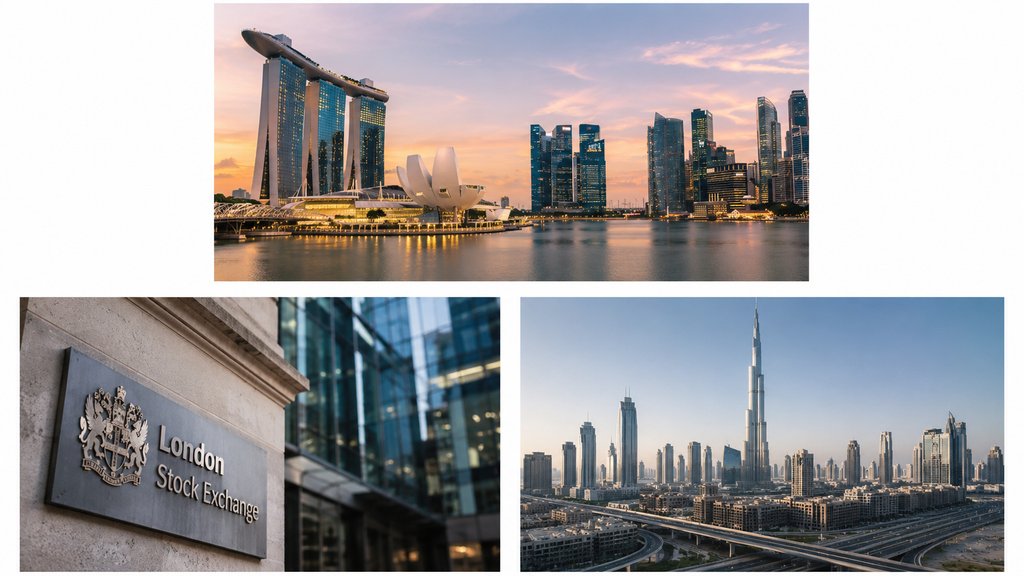
Singapore, Hong Kong, the United Kingdom, and the UAE each provide different business environments and strategic advantages.
The most suitable destination depends on a company’s objectives, financial capacity, operational requirements, and regulatory responsibilities.
By evaluating these factors carefully, businesses can make more informed decisions and build a stronger foundation for international growth.
Exploring opportunities in international markets? Contact AK Corporate Service to discuss your business expansion requirements and identify suitable corporate support solutions.